


Challenges for the aviation industry
Today’s industries face unprecedented pressure to reduce their environmental impact from governments, clients, and other stakeholders, with the aviation industry confronting some of the most complex sustainability challenges of any sector. As global awareness of climate change intensifies, airlines and aviation companies must navigate mounting regulatory requirements, evolving customer expectations, and increasing investor scrutiny regarding their environmental performance. This pressure extends across the entire aviation value chain, from aircraft manufacturers to airport operators, creating an urgent imperative for comprehensive decarbonization strategies that address both immediate operational improvements and long-term technological transformation.
Aviation accounts for approximately 2.8% of global carbon emissions, yet it represents one of the most challenging sectors to decarbonize due to its unique operational requirements and technological constraints.
The industry’s sustainability challenges are multifaceted and interconnected. Aircraft pollution remains a primary concern, with aviation emissions contributing not only to CO2 but also non-CO2 effects such as nitrogen oxides, water vapor, and particulates that impact climate change. The European Commission estimates that aviation generates 13.9% of transport emissions, making it the second-largest source of greenhouse gas emissions in the transport sector after road transport.
Why is aviation hard to decarbonize?
Sustainable aviation fuel presents significant obstacles in terms of both accessibility and pricing, as current manufacturing capabilities are projected to meet only a minimal portion of industry requirements through 2030.
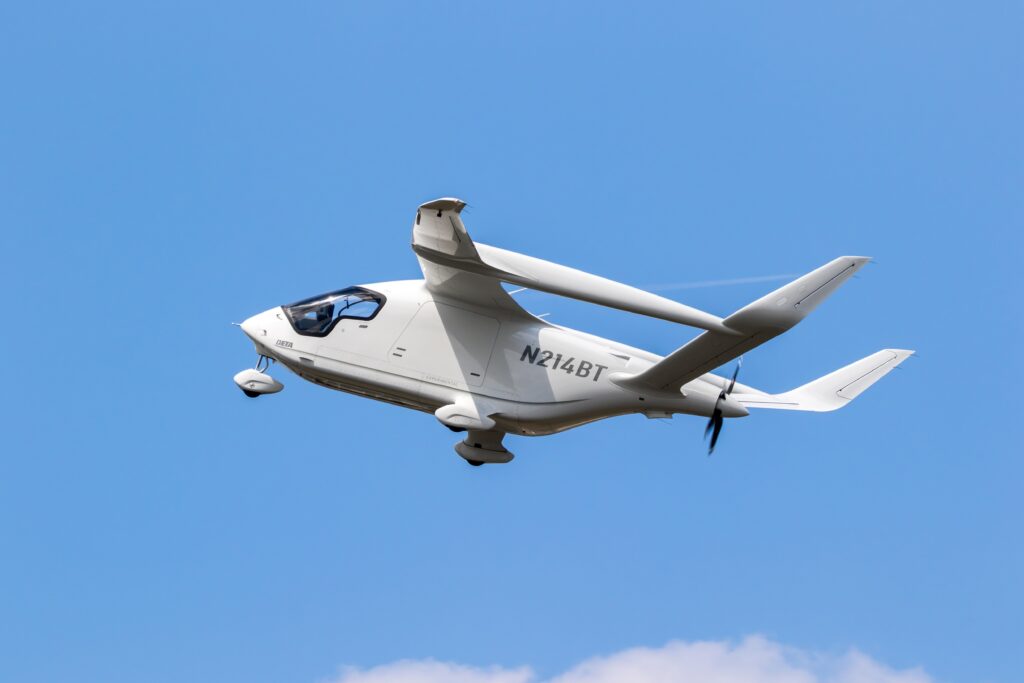
Technical barriers additionally hinder aviation’s decarbonization efforts. While emerging aircraft technologies such as electric and hydrogen-powered propulsion offer potential solutions for regional routes, they encounter substantial limitations for extended-range operations due to constraints in energy storage density and power-to-weight ratios.
New aircraft technologies, including electric and hydrogen propulsion systems, show promise for short-haul flights but face significant challenges for longer applications due to energy density requirements.
Additional factors that make aviation particularly difficult to decarbonize include:
- Infrastructure constraints and capital intensity: The aviation sector operates with significant capital stock of long-lived equipment and infrastructure that have been optimized specifically for conventional jet fuel. Airlines face enormous costs in retrofitting existing fleets, while airports require substantial infrastructure investments to support alternative fuel storage, distribution, and handling systems.
- Weight and energy density requirements: Aircraft design is fundamentally constrained by weight limitations and the need for energy-dense fuels.
- Multi-faceted climate impacts: Beyond carbon emissions, aviation produces complex non-CO2 effects including contrails, nitrogen oxides, and water vapor that contribute to climate warming.
- Long development and certification timelines: New aircraft and propulsion technologies require extensive testing, certification, and regulatory approval processes that can span decades.
- Economic and cost barriers: The transition to sustainable technologies involves substantial upfront investments and cost barriers that many companies in the aviation sector struggle to finance, particularly when sustainable alternatives like SAF remain significantly more expensive than conventional jet fuel.
Across all these emerging pathways, the ability to design, validate, and de-risk electrical power architectures under realistic operating conditions becomes a central enabler of aviation decarbonization.
How does power electronics testing contribute to overcoming these challenges?
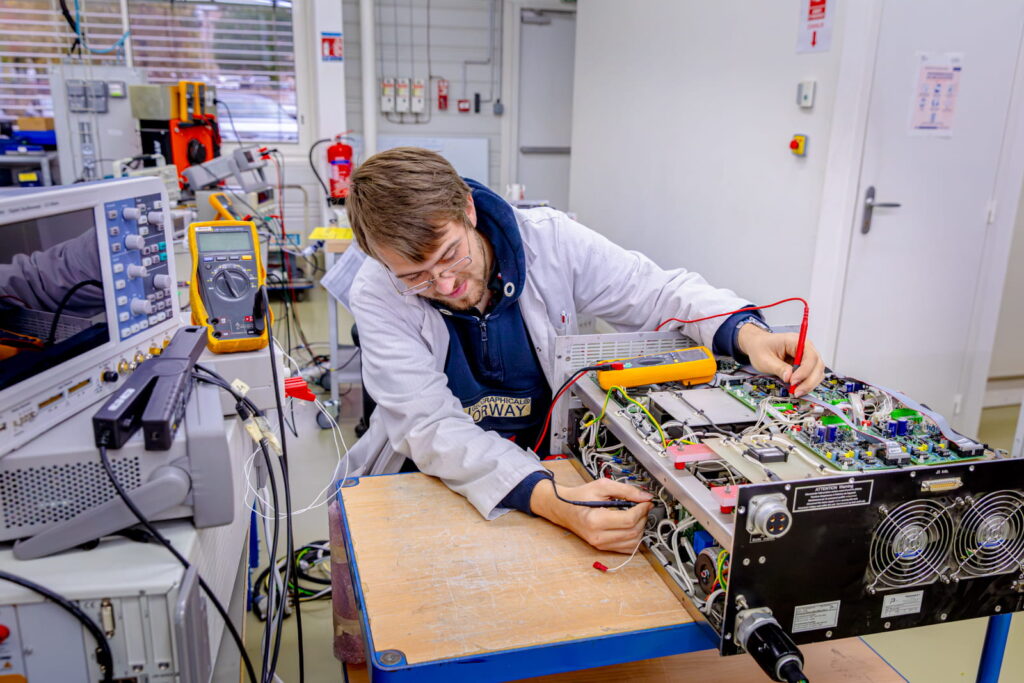
Power electronics testing involves comprehensive evaluation of electrical components and systems under simulated real-world conditions.
This testing encompasses various methodologies including Hardware-in-the-Loop (HIL) and Power Hardware-in-the-Loop (PHIL) testing, which enable engineers to validate electric propulsion systems, optimize power networks, and enhance safety protocols before actual flight implementation.
The testing process addresses critical aspects such as electromagnetic compatibility (EMC), power quality, thermal management, and operational reliability under extreme environmental conditions including altitude variations, temperature fluctuations, vibration, and humidity changes that aircraft encounter during flight operations.
Key examples of power electronics testing in aviation include:
- Advanced Energy Storage Testing : Comprehensive evaluation of energy storage systems for electric aircraft, including life cycle testing, performance validation under various load conditions, and safety assessments to ensure reliable power delivery throughout flight operations
- Electric Motor Drive and Propulsion System Testing: Validation of electric propulsion components through HIL testing, ensuring optimal performance, efficiency, and integration with aircraft power distribution systems
- Power Distribution Unit (PDU) Testing: Assessment of power converters, inverters, and distribution systems that manage electrical power flow throughout the aircraft, ensuring stable and reliable power delivery to all electronic systems
- Environmental Stress Testing: Evaluation of power electronics under extreme conditions including temperature cycling, vibration testing, and humidity exposure to simulate real flight environments and ensure component reliability
Power electronics testing therefore plays a crucial role in the decarbonization of aviation by ensuring the reliability, safety, and performance of electrical systems that enable more sustainable aircraft technologies. As the aviation industry transitions toward electric and hybrid propulsion systems, rigorous testing of power electronic components becomes essential for validating these innovative solutions.
Meet PLUTON by Spherea
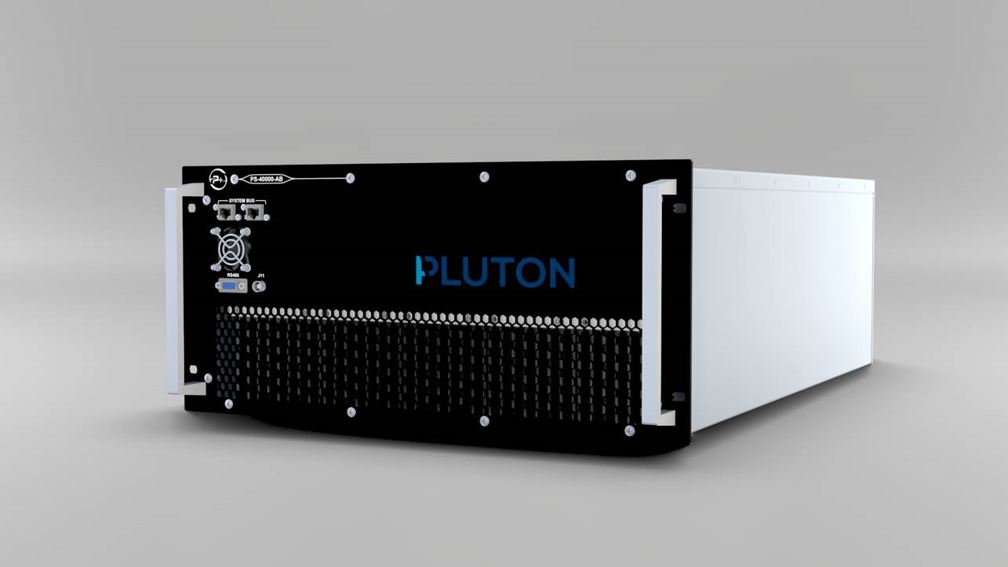
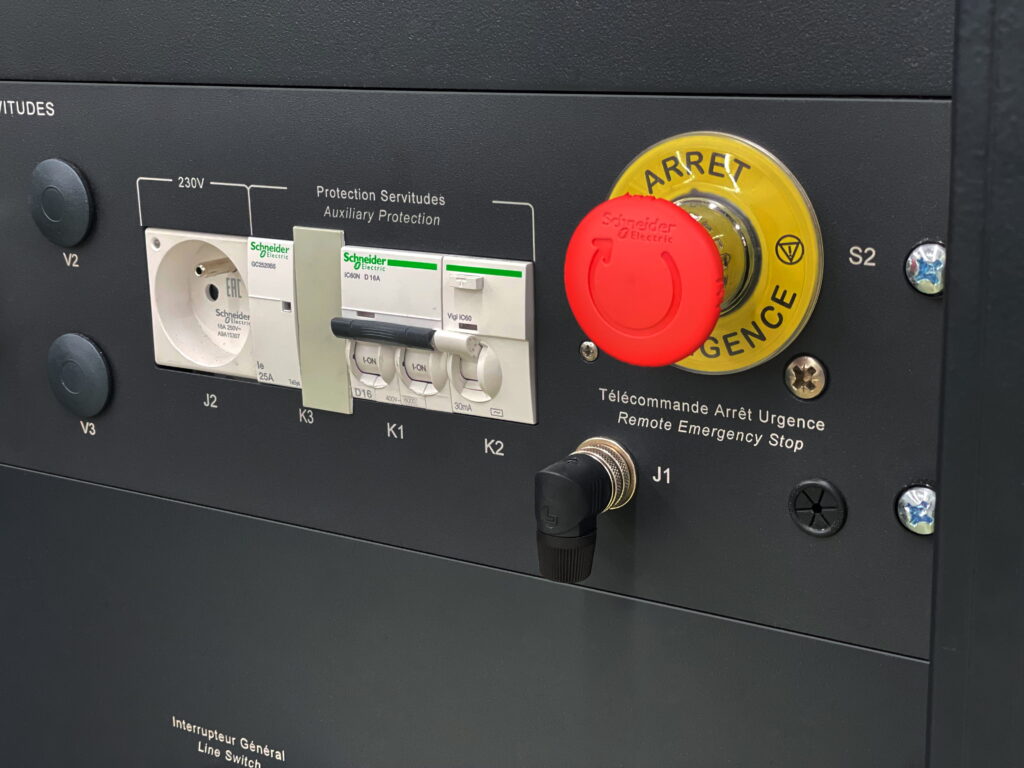
PLUTON® Series is the result of more than 5 years of R&D, and it’s now the most valuable AC & DC Regenerative Power Source on the market. PLUTON® Series is a configurable 4-quadrant Power Supply and Power System Emulator, working in various control capability with or without embedded real-time models:
- Power amplifier, voltage or current controlled
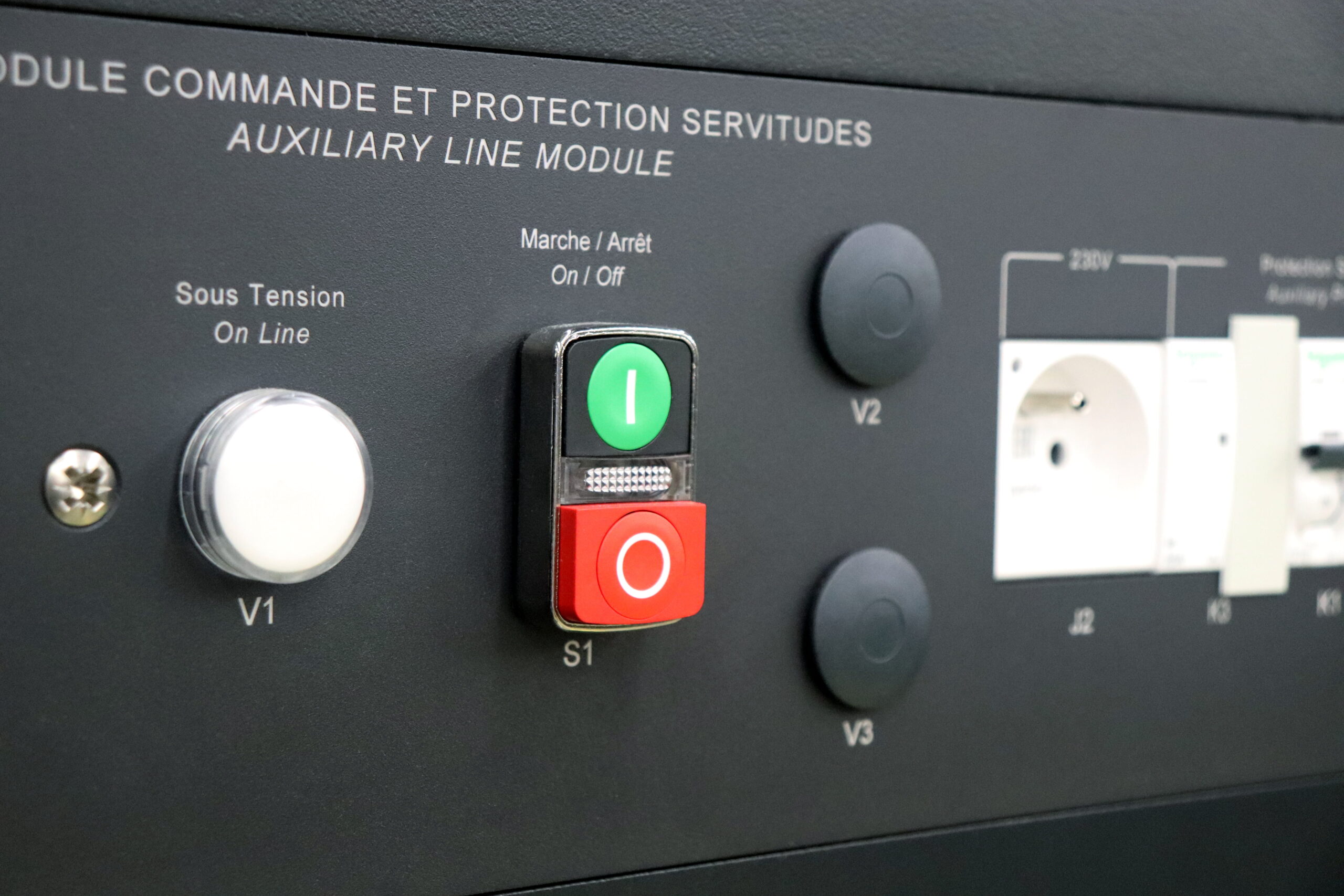
- Battery, Fuel Cell & e-motor built in emulators
- Regenerative Power Source/Load with high-speed remote control capability
Integrating innovative multi-level, high-frequency switching technology, the PLUTON® Series is purpose-built for real-time power system emulation. Its advanced control system enables low-latency execution of custom models. PLUTON® solutions can seamlessly integrate with third-party simulators and function as a power amplifier within Power Hardware-in-the-Loop (PHIL) applications. Designed for versatility, it operates in both AC and DC modes.
How PLUTON Accelerates Aviation Decarbonization
PLUTON’s advanced power electronics testing capabilities directly address the critical challenges facing the aviation industry in its transition to sustainable technologies. As airlines and companies across the aviation sector work to meet stringent carbon emissions reduction targets set by the European Commission and international frameworks like CORSIA, PLUTON provides the essential testing infrastructure needed to validate and optimize next-generation aviation power systems.
Electric Aircraft Propulsion System Validation
PLUTON’s 4-quadrant power supply and emulation capabilities enable comprehensive testing of electric aircraft propulsion systems, which are fundamental to aviation activity decarbonization. The system’s ability to emulate batteries, fuel cells, and electric motors allows engineers to:
- Validate motor drive performance under realistic flight conditions, ensuring accurate power conversion and control across all phases of flight operations
- Test power distribution networks for electric and hybrid aircraft, optimizing energy efficiency and reducing overall system weight
- Simulate regenerative systems that can recover energy during aircraft descent and landing phases, improving overall energy efficiency by up to 15%
Advanced Energy Storage Testing
As the aviation industry develops new aircraft with electric and hybrid-electric propulsion, energy storage systems — including batteries and hydrogen-based solutions — become critical components. PLUTON’s regenerative testing capabilities provide:
- Comprehensive validation of energy storage systems under extreme aviation conditions, including rapid altitude changes, temperature variations, transient loads, and high-power operating cycles
- Lifecycle testing that accelerates aging and degradation mechanisms to predict system performance over 10–20-year aircraft operational lifespans, across different storage technologies
- Safety assessment protocols ensuring compliance with stringent aviation safety standards, while supporting high energy density, efficient energy conversion, and robust system integration
Supporting Next-Generation Aircraft Development
PLUTON’s Power Hardware-in-the-Loop (PHIL) capabilities enable companies developing new aircraft technologies to:
- Reduce development timelines through real-time simulation and testing of power systems before physical prototypes
- Optimize power electronics for hydrogen fuel cell systems, supporting the development of zero-emission aircraft for regional routes
- Validate electromagnetic compatibility (EMC) for complex electrical systems, ensuring compliance with aviation safety regulations.


Supporting Next-Generation Aircraft Development
PLUTON’s Power Hardware-in-the-Loop (PHIL) capabilities enable companies developing new aircraft technologies to:
- Reduce development timelines through real-time simulation and testing of power systems before physical prototypes
- Optimize power electronics for hydrogen fuel cell systems, supporting the development of zero-emission aircraft for regional routes
- Validate electromagnetic compatibility (EMC) for complex electrical systems, ensuring compliance with aviation safety regulations.
Real-World Impact on Aviation Decarbonization Goals
PLUTON’s testing capabilities directly contribute to the aviation sector’s ambitious decarbonization targets by enabling faster development and deployment of sustainable technologies.
The system’s ability to conduct operational measures testing ensures that new electric propulsion systems not only meet environmental goals but also maintain the safety, reliability, and performance standards that the aviation industry demands. This comprehensive testing approach represents a crucial first step in validating the technologies needed to achieve net-zero aviation emissions by 2050.
Through PLUTON’s advanced testing capabilities, Spherea is directly supporting the aviation value chain in overcoming the technical and cost barriers that have historically slowed aviation decarbonization efforts, making sustainable aviation technologies more accessible and commercially viable for airlines and aircraft manufacturers worldwide.