
The Critical Importance of Electronic Warfare in Modern Military Operations
In an increasingly connected world where military success depends on electromagnetic dominance, electronic warfare (EW) has evolved from a supporting capability to a mission-critical component of modern defense strategy. Global conflicts show that controlling, exploiting and denying access to the electromagnetic spectrum can shape the outcome of military operations long before conventional weapons are deployed.
Electronic warfare encompasses the strategic use of electromagnetic energy to gain tactical and strategic advantages over adversaries. This invisible battlefield spans the entire electromagnetic spectrum, from radio waves and microwaves to infrared and visible light, making it a domain where victory can be achieved through sophisticated Electronic Attack (EA), robust Electronic Protection (EP), and comprehensive Electronic Support Measures (ES).
The criticality of EW becomes evident when considering that modern military platforms; from aircraft and naval vessels to ground-based systems, they rely heavily on electromagnetic systems for navigation, communication, target acquisition, and defensive countermeasures.
Electronic Countermeasures can disable enemy radar systems, disrupt communications networks, and neutralize guided weapons systems without causing physical destruction, offering commanders non-kinetic engagement options that reduce collateral damage while maintaining operational effectiveness.

Contemporary conflicts have highlighted how EW capabilities can level the playing field between conventional and asymmetric forces. The ongoing conflicts have showcased electronic warfare’s role in everything from countering drone swarms to protecting critical infrastructure from enemy air defenses.
Nations worldwide are recognizing that electromagnetic spectrum superiority is no longer optional; it’s essential for national security and operational success.
Types of electronic and electromagnetic warfare
Electronic warfare manifests through diverse operational scenarios that demonstrate the strategic importance of electromagnetic spectrum control. Modern military forces employ sophisticated techniques to detect, analyze, and exploit enemy communications while protecting their own electromagnetic signatures.
Signal Detection and Analysis Operations
Electronic Support Measures enable military forces to detect, identify, and localize radio signals across the electromagnetic spectrum. Advanced systems like tactical ELINT platforms can precisely identify radar emissions from enemy air defense networks, providing critical intelligence for mission planning. These capabilities extend to intercepting communications between enemy forces, analyzing transmission patterns, and determining the location of hostile transmitters through triangulation techniques.
Military units deploy specialized equipment to monitor VHF, UHF, and HF radio communications, capturing voice transmissions, data links, and command signals. This intelligence gathering enables commanders to understand enemy intentions, troop movements, and operational capabilities without direct engagement.
Network Communication Exploitation
Modern electronic warfare extends beyond traditional radio interception to encompass sophisticated network access capabilities. Electronic Attack systems can penetrate enemy communication networks through signal injection techniques, where malicious code is embedded within electronic attack signals targeting hostile radar, radio, or SATCOM terminals.
These operations enable military forces to access networked communication systems, disrupting command and control structures while gathering intelligence on enemy operations. Advanced systems can simultaneously monitor multiple communication channels, decrypt encoded transmissions and provide real-time intelligence to operational commanders.
Practical Electronic Warfare Applications
Contemporary conflicts demonstrate electronic warfare’s operational impact through specific examples. IED jamming systems protect military convoys by disrupting radio-controlled explosive devices, preventing detonation through targeted frequency interference.
Electronic warfare aircraft employ powerful jammers against integrated air defense systems, blinding enemy radars to enable penetration of hostile airspace. These systems can generate false radar signatures, creating phantom targets that overwhelm enemy tracking capabilities while protecting friendly aircraft during critical missions.
Signals Intelligence Integration
lectronic warfare operations integrate Communications Intelligence (COMINT) and Electronic Intelligence (ELINT) to provide comprehensive battlefield awareness. Military forces employ direction-finding equipment to locate enemy transmitters, while advanced signal processing systems analyze intercepted communications for tactical intelligence.
These capabilities proved decisive in operations where electronic warfare units enabled ground forces to bypass enemy ambushes through intercepted communications intelligence, demonstrating the tactical advantages of electromagnetic spectrum control in modern military operations.
Emerging technologies in electronic warfare
Drone-Based Electronic Warfare Systems
Electronic warfare encompasses the strategic use of electromagnetic energy to gain tactical and strategic advantages over adversaries. This invisible battlefield spans the entire electromagnetic spectrum, from radio waves and microwaves to infrared and visible light, making it a domain where victory can be achieved through sophisticated Electronic Attack (EA), robust Electronic Protection (EP), and comprehensive Electronic Support Measures (ES).
The criticality of EW becomes evident when considering that modern military platforms; from aircraft and naval vessels to ground-based systems, they rely heavily on electromagnetic systems for navigation, communication, target acquisition, and defensive countermeasures.
Electronic Countermeasures can disable enemy radar systems, disrupt communications networks, and neutralize guided weapons systems without causing physical destruction, offering commanders non-kinetic engagement options that reduce collateral damage while maintaining operational effectiveness.

Low-Cost Electronic Warfare Systems
The proliferation of affordable electronic warfare capabilities has democratized electromagnetic spectrum operations. Commercial-off-the-shelf components enable military forces to deploy distributed jamming networks using ruggedized smartphones and software-defined radios at a low cost.
Ukraine’s innovative use of modified consumer electronics demonstrates how low-cost systems can achieve strategic impact.
Artificial Intelligence in Electronic Warfare
AI-powered electronic warfare systems revolutionize threat detection and response capabilities through machine learning algorithms that identify and classify electromagnetic signatures in real-time.
Cognitive electronic warfare platforms employ neural networks to predict enemy communication patterns, automatically selecting optimal jamming frequencies and power levels. These systems can process terabytes of electromagnetic spectrum data simultaneously, identifying vulnerable communication nodes and executing coordinated electronic attacks without human intervention.
Network Sensor Integration
Distributed sensor networks create comprehensive electromagnetic battlefield awareness through interconnected detection nodes spanning multiple domains. These systems combine acoustic sensors, RF detectors, and optical surveillance platforms into unified threat detection networks capable of tracking multiple electronic warfare targets simultaneously.
Modern network sensor architectures like those developed for NATO applications integrate radar, electronic support measures, and communication intelligence platforms through secure data links. These distributed systems provide redundant coverage against electronic attacks, ensuring continued operation even when individual sensors face jamming or physical destruction.
Building on these emerging trends and evolving defense requirements, Spherea developed ESUS — an innovative solution designed to detect, identify and sectorise signals, unlocking significant potential for defense applications.
Introducing ESUS
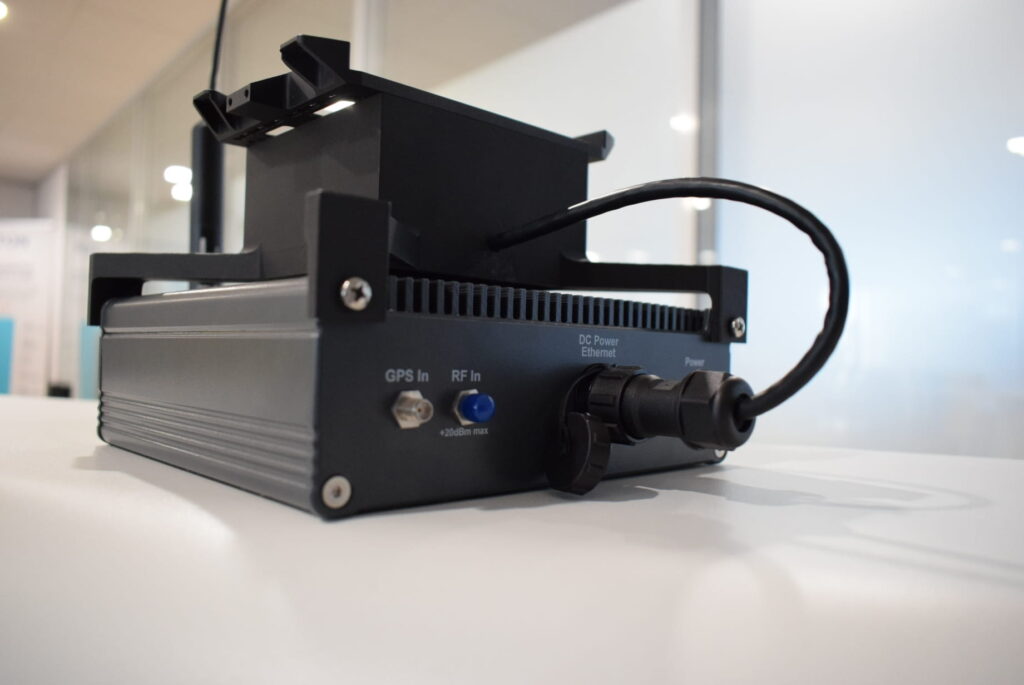
ESUS is Spherea’s latest electronic warfare equipment. A system is designed to be used by non-expert users and to be as simple as possible.
The system primarily uses software-defined radio (SDR) and signal processing technologies while presenting a touchscreen tablet user interface that is understandable and highly accessible compared to competing systems.
Detection performance is based on a scan rate of more than 1THz/s and sub-band input level adjustment to optimize the signal-to-noise ratio for weak signals. The artificial intelligence capability for the identification of the topologies of the detected signals provides the user with additional information for his knowledge of the electromagnetic environment.
The sensor is programmed to adapt according to the signals to be detected. This allows for great flexibility and responsive adaptability. The list of target types, not exhaustive, is: PMR, FHSS, GSM, Wifi, Bluetooth, Drone, Satcom, IOT and many more.
ESUS‘ ability to provide the user with a time sector of arrival of the various signals makes it possible to quickly adapt the device on patrol or surveillance to face the threat or provide intelligence.
The system is designed to be quickly and easily integrated into a vehicle with a DC power supply with a wide input range and moderate consumption. It can be integrated into almost all types of vehicles.