

ESUS – RF Detection and Identification
Solutions
Discover ESUS
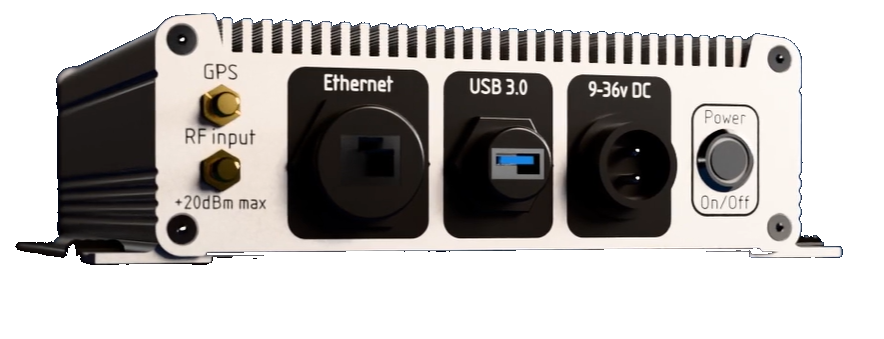
Our ESUS system is designed to provide a compact solution that can be integrated on a drone platform for signal detection and identification.
ESUS enables detection, identification, and sectorization of electromagnetic signals within the 30 MHz to 6 GHz range. This system is intended for use by conventional armed forces to detect threats and protect units during movement or stationary phases.
The main advantage of this system lies in its ease of use, designed to be accessible even to non-technicians.
Three sets are available:
- ESUS DI-9C full set: Radio signal detection and identification system in a compact suitcase format with antennas and touchscreen tablet.
- ESUS DI-9D full set: Radio signal detection and identification system in a drone payload format with antennas, touchscreen tablet, and drone interface.
- ESUS DF-6C full set: Radio signal detection, identification, and sectorization system in a rugged suitcase format with antennas and touchscreen tablet.
Use cases
Surveillance and Security: Ideal for security operations requiring detection, rapid analysis, and sectorization of radio signals.
Tactical Interventions: Used by law enforcement and government agencies for critical missions.
Why choose ESUS?

Easily transportable
Presented in a compact and robust suitcase format, ESUS is easy to transport and deploy.

Accessible to non-experts
The system and user interfaces are designed to be usable by individuals without expertise in electromagnetic intelligence.

Scalability
Based on software-defined radio technology, a simple software update can add new features or improve processing performance.
Features
Detection
The system detects signals through spectral analysis. The spectrum scanning speed allows detection of even very brief signals. Detected signals may include walkie-talkies, PMR, mobile networks, spread-spectrum signals, drones, domestic signals, etc.
Identification
The system uses artificial intelligence to identify signal topology types. An autonomous learning console is under development for rapid signature learning and deployment.
Sectorization
After detecting and identifying signals, the system displays the angular sector of arrival for signals of interest on the user interface.